Today’s EASC Meeting Was a Wake Up Call
- Clayton Frost

- May 20
- 3 min read
Today’s EASC meeting should be a wake up call.
The room was full.
The overflow room was full.
People missed work, rearranged their day, and showed up because they are worried about what is happening at the CVRD.
After today, it is clear they have every reason to be.
The discussion around Temporary Use Permits raised serious questions:
What will this really cost?
How long will it take?
Who will it hurt?
What happens if someone applies and gets denied?
Why are short term rentals, tiny homes, RVs, food trucks, farm uses, tourism, and commercial businesses being pushed through the same confusing process?
Those are not unreasonable questions. They are exactly the questions local government should answer before it acts.

Area E
A Temporary Use Permit may sound simple on paper, but the reality can be very different.
The application fee may start around $1,200, but that is not the full cost.
Depending on the use, people could also face rationale letters, servicing plans, survey plans, title reviews, covenant and easement reviews, watercourse setbacks, topography mapping, suitability assessments, proof of potable water, Island Health approvals, provincial water licences, drainage and stormwater plans, erosion and sediment control plans, restoration plans, landscape architect reports, biologist sign off, security deposits, ALC referrals, and more.
That is not a lightweight process.
For many residents, farmers, small businesses, tourism operators, and people trying to stay housed, the process itself could become the barrier.
We also heard that bylaw enforcement has been dealing with roughly 10 to 12 short term rental files per year. That is about one per month.
So before creating a large new process, it is fair to ask whether the solution actually matches the size of the problem.
There were also practical questions raised about simpler options.
Could short term rentals be handled through a business licence or registration process?
Could minor zoning amendments make more sense than Temporary Use Permits?
Could bed and breakfast definitions be updated?
Could property PID numbers help streamline approvals?
Could food trucks simply be permitted in commercial and industrial zones?
These are not radical ideas.
They are practical questions from people looking for a workable path forward.
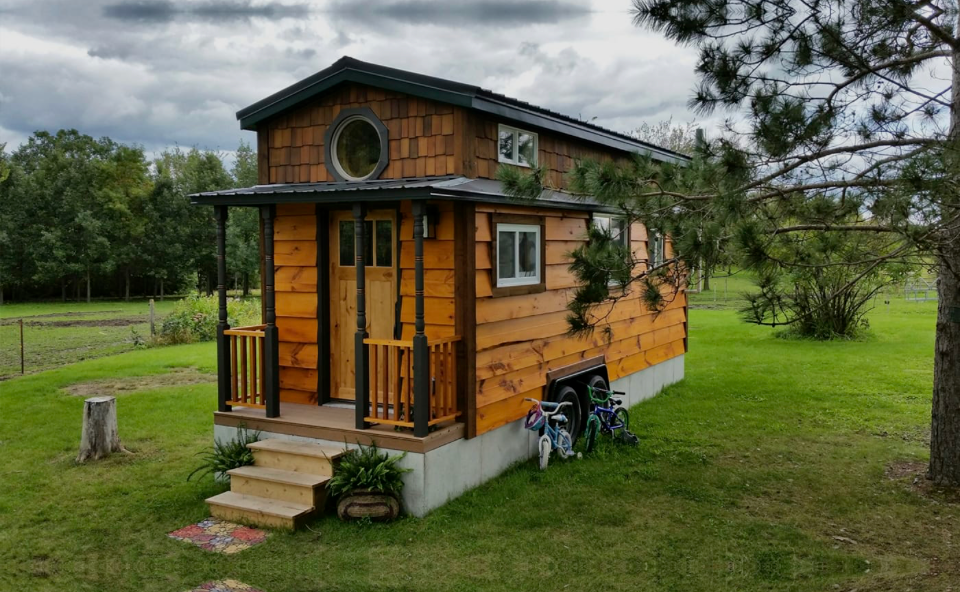
One of the biggest issues today was tiny homes and RV living.
The CVRD made it clear that it cannot override the BC Building Code or legalize full time RV and tiny home living through a Temporary Use Permit.
But it was also made clear that the Board does have discretion over enforcement direction.
That is where the conversation needs to go next.
If people are already housed safely and responsibly, they should not be pushed further into crisis while government figures out the paperwork.
There needs to be an urgent discussion around enforcement, eviction notices, and how to protect people from unnecessary harm while longer term solutions are worked on.
Today, the Committee did make some movement.
A recommendation passed asking staff to report back on a streamlined Temporary Use Permit process for short term rentals, including possible fee options.
That is a step in the right direction.
But the public still needs to see what “streamlined” actually means.
A lower application fee does not solve the problem if the process still requires thousands of dollars in reports, plans, approvals, and professional costs.
My position is simple:
Do not rush this.
Separate the issues.
Tiny homes and RV living are one issue.
Short term rentals are another.
Food trucks and commercial uses are another.
Farm and tourism related uses are another.
They should not all be jammed into one broad framework before the public understands the consequences.
Where there are clear business needs, create a practical path forward.
Where people are housed safely and responsibly, do not push them further into crisis.
Where the rules are outdated, fix the rules instead of forcing people into expensive, uncertain, temporary permits.
And above all, respect the public enough to slow down, explain the real costs, and listen before acting.
People are not asking for no rules.
They are asking for fair rules.
Clear rules.
Practical rules.
Rules that match real life in the Cowichan Valley.
Today proved something important:
People are awake. People are engaged. And people are paying attention.
That is a good thing.
Local government works best when it listens before it acts.
Right now, the CVRD needs to keep listening.


Comments